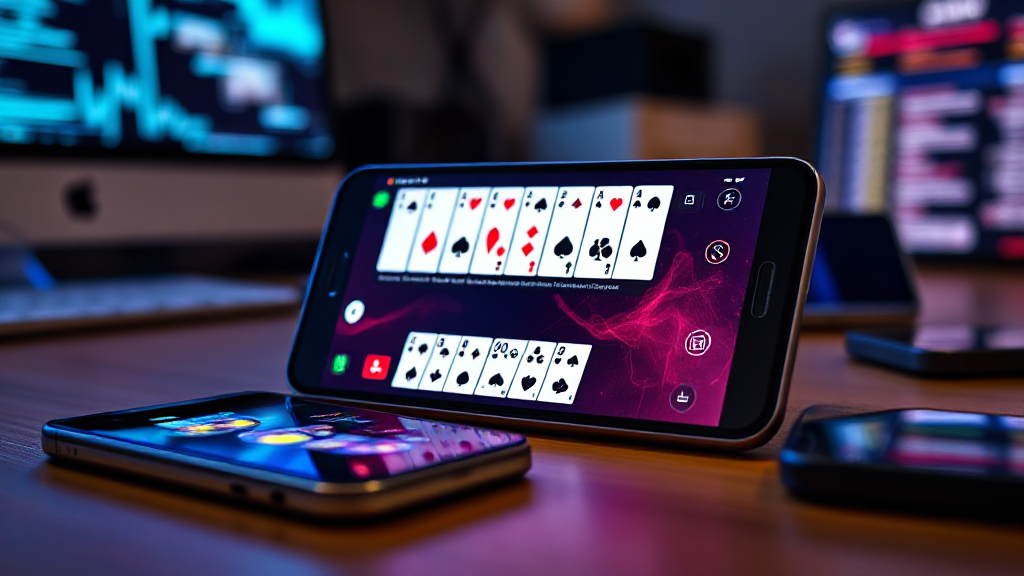
8 Questions People Keep Asking About the Online Rummy Game
Short answer: an Online Rummy Game is a digital version of the classic card game, played on a phone or tablet instead of a physical table, where cards are dealt, drawn and discarded through an app interface. Everything else people ask about it tends to fall into eight recurring questions, so let’s work through them one by one.
1. What Exactly Makes a Rummy Game “Online”?
The core rules don’t change. You still build sets and sequences, you still pick from the closed deck or the open discard pile, and you still declare when your hand is arranged into valid melds. What changes is the delivery. Instead of shuffling a physical deck, the app handles the deal, tracks turns and enforces the melding rules automatically.
That automation is why the digital version feels faster to learn. You can’t accidentally mis-sort a hand or forget whose turn it is, because the interface handles the housekeeping while you focus on decisions.
2. How Do You Actually Play a Hand?
Each player receives a set number of cards, and the remaining cards form two piles: a face-down stock pile and a face-up discard pile. On your turn you take one card, either from the stock or the discard pile, then discard one card to end your turn. The goal is to arrange your entire hand into valid combinations before anyone else.
Most apps include a practice table or a low-pressure mode where you can run through several hands without any pressure. If you’re brand new, that’s the fastest way to internalise the rhythm of draw, assess, discard.
3. What Counts as a Valid Meld?
A valid hand is built from two types of combinations. A set is three or four cards of the same rank in different suits. A sequence is three or more consecutive cards of the same suit. Most rule sets require at least one pure sequence, meaning a run with no wild card substituted in.
Wild cards add flexibility. A joker or designated wild card can stand in for a missing card in a set or sequence, which is why experienced players often hold one back until the late turns of a hand.
4. Are the Rules the Same Across Every App?
Broadly yes, but the details vary more than beginners expect. Point values, the number of cards dealt, whether a printed joker is used, and how many pure sequences are required can all differ between one app and the next.
This is exactly why comparison matters before you settle on a platform. Directory sites that list and compare Android rummy apps, such as Fast Play Rummy, exist so you can check the rule variant, interface style and feature set side by side rather than installing five apps at random. Reading the rules screen before your first hand saves a lot of confusion later.
5. Does Skill Actually Matter, or Is It Luck?
Both are present, but skill compounds over time. The deal is random, so any single hand can go badly. What separates players is decision quality: knowing when to break a promising sequence to block an opponent, when to hold a wild card, and when to discard a card that’s more useful to someone else than to you.
Because the information is partially hidden, reading the discard pile is one of the most transferable skills. A card that’s been discarded twice is unlikely to be needed by anyone, which makes it a safer throw than a card that’s never appeared.
6. What Should Beginners Focus On First?
Start with sequence discipline. New players tend to hoard high-value cards and end up with a scattered hand. Instead, commit early to one or two sequences and let the sets form around them.
Second, watch your point total. Even when you don’t win the hand, keeping unmelded cards low-value limits the damage. Third, don’t over-discard from a suit you’re already building in. Small habits like these make a much bigger difference than memorising advanced strategies.
7. Is It Safe and Legal to Play on a Phone?
Legality depends entirely on where you live, and rules differ by region. Some jurisdictions permit skill-based card games, others restrict them, and age requirements typically apply. Most app directories and stores list an 18+ requirement for this category.
On the technical side, reputable apps use account verification, secure connections and clear privacy policies. Before installing anything, check the permissions requested and read the operator’s terms. If an app asks for more access than a card game reasonably needs, that’s a reason to look elsewhere.
8. How Do You Choose Between So Many Apps?
Narrow it down by what you actually care about. If you’re learning, prioritise a clean tutorial and a practice mode. If you play daily, look at table speed, notification settings and how the app handles disconnections. If you play with friends, check whether private tables are supported.
Then compare the practical details: rule variant, interface clarity, update frequency and how responsive the support channel is. A shortlist of three apps tested over a week tells you more than twenty store listings read in five minutes. Once you’ve found one that fits how you play, the questions above stop being questions and just become how the game works.